Landscape Gardening in Barbican: Elegant Outdoor Spaces for Modern City Living
Why Landscape Gardening in Barbican Matters

Landscape gardening in Barbican is about more than planting flowers and trimming hedges. In a place known for its iconic architecture, dense urban layout, and contemporary lifestyle, outdoor space has to work harder. Gardens, terraces, courtyards, and roof spaces need to feel calm, attractive, and practical all at once.
Whether you own a private home, manage a commercial property, or want to improve a shared outdoor area, landscape gardening in Barbican can transform even the smallest space into a refined retreat. The right design can soften concrete surroundings, improve property value, and create a healthier connection to nature.
Barbican’s urban setting presents unique opportunities. With careful planning, you can combine structure and softness, using planting schemes, paving, lighting, and water features to create an outdoor environment that feels balanced. Landscape gardening in Barbican is especially effective when the design reflects both modern architecture and natural beauty.
Understanding the Barbican Environment

The Barbican area has a distinct character. Its buildings, plazas, and elevated spaces create a strong architectural identity, which means any garden design must complement existing features rather than compete with them. Successful landscape gardening in Barbican begins with understanding the local context, from shade patterns to wind exposure.
Many outdoor areas in Barbican are sheltered by surrounding structures, while others are exposed to light, wind, and changing temperatures. This makes plant selection especially important. A well-planned Barbican garden must consider drainage, sun orientation, privacy, and the amount of maintenance the space will require over time.
Another important factor is how people use the space. A quiet courtyard may need lush planting and seating, while a rooftop terrace might benefit from lightweight containers, resilient species, and clean lines. Landscape gardening in Barbican works best when it responds to both the architecture and the lifestyle of the people who use the space.
Key site factors to assess
- Light levels throughout the day
- Wind exposure and shelter
- Soil depth and drainage
- Access for maintenance
- Privacy requirements
- Existing architectural style
Design Principles for Landscape Gardening in Barbican

Good design is the foundation of any successful outdoor project. In Barbican, the best results often come from a blend of modern structure and natural texture. Clean paving, geometric layouts, and carefully chosen materials can sit comfortably alongside soft planting and organic forms.
One of the most effective approaches to landscape gardening in Barbican is to keep the design clear and uncluttered. Urban spaces can become visually busy very quickly, so a restrained palette often works better than excessive decoration. Repeating a few key materials, plants, and shapes can create a sense of calm and cohesion.
It is also important to think in layers. Low groundcover, mid-height shrubs, ornamental grasses, and vertical elements like screens or trees can add depth without overwhelming the space. Layered planting is especially valuable where privacy and softness are both desired.
Core design principles
- Balance hard landscaping with planting
- Use materials that suit the built environment
- Keep circulation routes clear
- Create focal points without overcrowding
- Choose plants that thrive in urban conditions
Plant Selection for Barbican Gardens

Plant choice is one of the most important aspects of landscape gardening in Barbican. Since many spaces are compact, elevated, or partially shaded, plants must be selected for resilience as well as appearance. It is usually best to choose species that can handle variable light, dry conditions, and occasional wind.
Evergreen shrubs are popular because they provide year-round structure. Grasses and ferns can add movement and softness. Seasonal colour can be introduced through flowering perennials, container planting, and climbers that bring life to walls and screens. The best gardens often combine reliable staples with a few statement plants for visual impact.
For those seeking low-maintenance results, it is wise to focus on plants that suit the microclimate. In Barbican, this may include plants that tolerate shade, partial shade, or container growth. Landscape gardening in Barbican should feel beautiful throughout the year, not just during one season.
Popular planting ideas
- Box alternatives and structural evergreens
- Ornamental grasses for texture and movement
- Shade-tolerant perennials
- Climbers for vertical interest
- Compact small trees in large containers
- Pollinator-friendly flowers for seasonal interest
Tip: Using a mix of foliage shapes and leaf textures can be just as effective as relying on colour alone.
Hard Landscaping Elements That Work Well
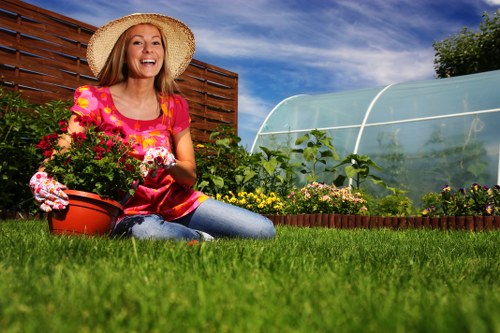
Hard landscaping is the backbone of outdoor design, especially in an urban setting. In landscape gardening in Barbican, materials and structural elements need to be durable, elegant, and proportionate to the space. Paving, decking, raised beds, planters, and retaining edges all contribute to how a garden looks and functions.
Stone, porcelain, timber, and metal are often used to create a sleek and lasting finish. Each material has its own feel, and the best choice depends on the overall style of the property. For example, contemporary paving may suit a minimalist terrace, while timber decking can soften a more formal layout.
Raised planters are especially useful in Barbican because they define zones, improve soil quality, and allow for more controlled planting. They also help separate seating areas from green areas. Landscape gardening in Barbican often relies on these built features to make the most of limited space while maintaining visual clarity.
Common hard landscaping features
- Natural stone or porcelain paving
- Custom-built raised planters
- Timber or composite decking
- Decorative gravel and edging
- Privacy screens and trellises
- Built-in seating areas
Creating Privacy in a Busy Urban Setting
Using planting and structures effectively
Privacy is a major concern for many people considering landscape gardening in Barbican. In a built-up environment, outdoor areas can feel exposed without thoughtful screening. Fortunately, privacy can be achieved in elegant ways that do not make a space feel closed in.
Tall planting, semi-transparent screens, and carefully positioned trellises can block unwanted views while preserving light and airflow. Climbing plants are particularly useful because they create vertical softness and can be trained to suit different heights and angles. Landscape gardening in Barbican often benefits from combining living and structural privacy elements.
It is best to avoid solid barriers that feel heavy or oppressive. Instead, use a layered approach that gradually filters views. This creates a more relaxed, sophisticated atmosphere. A garden should feel protected, not boxed in, and the right balance can make all the difference.
Privacy solutions to consider
- Evergreen hedging in containers
- Lattice or slatted screens
- Trellis with climbing plants
- Strategic placement of planters
- Ornamental trees for elevated screening
Lighting Design for Evening Ambience
Thoughtful lighting is essential for modern landscape gardening in Barbican. Outdoor lighting extends the usability of a space, improves safety, and highlights key features after dark. In a city setting, it can also create a warm contrast to the surrounding built environment.
The most effective lighting schemes are subtle rather than overpowering. Low-level lights along paths, uplighting for trees, and discreet strip lighting under seating or planters can add atmosphere without glare. The aim is to create layers of light that feel inviting and balanced.
Lighting should always support the design rather than dominate it. When used correctly, it can reveal texture, guide movement, and make the garden feel more spacious. Landscape gardening in Barbican becomes especially rewarding when the space transitions smoothly from day to night.
Lighting options for urban gardens
- Path lights for safety and direction
- Spotlights for plants or architectural features
- Wall lights for ambient illumination
- Low-voltage systems for efficiency
- Hidden lighting for planters and steps
Book your service now if you want lighting that adds both function and style to your outdoor area.
Water Features and Calm Urban Atmosphere
Adding movement and sound
Water features can make a dramatic difference in landscape gardening in Barbican. The sound of flowing water helps mask background noise and creates a peaceful mood, which is especially valuable in a busy city environment. Even a small feature can introduce a sense of luxury and tranquillity.
In compact spaces, simple designs often work best. Wall-mounted fountains, reflecting pools, and narrow rills can all fit neatly into urban gardens without taking up too much room. The key is to choose a feature that suits the scale of the space and complements the surrounding materials.
Water features also add another layer of sensory experience. The movement, reflections, and gentle sound can make a garden feel more immersive. For many property owners, this is what takes landscape gardening in Barbican from functional to exceptional.
Benefits of water features
- Softens the atmosphere
- Helps mask urban noise
- Adds visual interest and reflection
- Enhances relaxation
- Works well in both small and large spaces
Seasonal Maintenance and Long-Term Care
Beautiful gardens need regular care. One reason people invest in landscape gardening in Barbican is to create an outdoor area that remains attractive throughout the year. To achieve that, maintenance must be realistic, planned, and appropriate to the design.
Seasonal tasks may include pruning, replanting, feeding, cleaning paving, checking drainage, and refreshing container displays. In urban spaces, leaves, dust, and pollution can accumulate faster than in rural settings, so routine upkeep helps preserve both appearance and plant health.
Low-maintenance design is a smart choice for many Barbican properties. By selecting resilient plants, efficient irrigation, and durable materials, it is possible to reduce the amount of care required while still enjoying a polished result. Landscape gardening in Barbican should support your lifestyle, not complicate it.
Maintenance checklist
- Watering plan for containers and young plants
- Seasonal pruning and deadheading
- Cleaning of hard surfaces
- Inspection of drainage and irrigation
- Replacement of tired planting as needed
Making the Most of Small Spaces
Many Barbican outdoor areas are compact, but size does not have to limit impact. In fact, small spaces often allow for more focused and creative landscape gardening in Barbican. With the right design, a modest terrace or courtyard can feel spacious, stylish, and highly functional.
Vertical gardening, mirrored surfaces, slimline furniture, and multi-purpose planters can all help maximise space. It is also useful to think about sightlines. A carefully placed feature at the far end of the space can draw the eye outward and make the area feel larger than it is.
When every element has a purpose, even the smallest garden can feel luxurious. Good landscape gardening in Barbican makes intelligent use of every square metre, turning limitations into design opportunities.
Smart small-space ideas
- Use wall planting and climbers
- Choose foldable or built-in seating
- Keep the colour palette simple
- Repeat materials for visual unity
- Use containers to create flexible layouts
Sustainable Landscape Gardening in Barbican
Sustainability is becoming increasingly important in urban design. Landscape gardening in Barbican can support environmental goals through thoughtful plant choice, water efficiency, and responsible material selection. A sustainable approach can also reduce long-term costs and maintenance needs.
Native and climate-suitable plants often require less water and adapt better to local conditions. Permeable paving can reduce runoff, while rainwater harvesting and efficient irrigation can help manage resources more carefully. Recycled or locally sourced materials are also worth considering where appropriate.
Green roofs, pollinator planting, and biodiversity-friendly features can further improve the ecological value of a property. Even in a dense city setting, a well-planned garden can support wildlife and contribute to a healthier environment. Landscape gardening in Barbican is not only about appearance; it is also about responsible design.
Sustainability priorities
- Choose plants suited to the microclimate
- Reduce water waste with smart irrigation
- Use durable, long-lasting materials
- Support biodiversity with nectar-rich planting
- Minimise waste through careful planning
How Professional Planning Adds Value
Working with experienced specialists can make a major difference in landscape gardening in Barbican. Professionals understand how to combine aesthetics, engineering, and practicality. They can assess a site properly, recommend suitable materials, and design a layout that works for both daily use and long-term performance.
Professional planning also helps avoid common mistakes, such as poor drainage, unsuitable plant choices, or overcrowded layouts. In a place like Barbican, where space and structure matter so much, these details have a big impact. A well-executed project looks better, lasts longer, and is easier to maintain.
Whether the project involves a private courtyard, a communal area, or a rooftop terrace, expert input can elevate the result. Landscape gardening in Barbican becomes more effective when creativity is supported by practical experience and careful attention to detail.
What professional planning can improve
- Site analysis and design accuracy
- Plant selection and positioning
- Material durability and consistency
- Drainage and access solutions
- Long-term maintenance efficiency
Final Thoughts on Landscape Gardening in Barbican
Landscape gardening in Barbican offers the chance to create outdoor spaces that feel elegant, restorative, and perfectly suited to urban living. With the right mix of planting, structure, lighting, and maintenance planning, even the most compact area can become a standout feature of a property.
From private terraces to shared courtyards, the best designs are those that reflect the character of the space while improving how it is used. Clean lines, resilient plants, and carefully chosen materials can bring harmony to a busy environment and create a garden that feels both modern and welcoming.
If you are ready to improve your outdoor space, now is the perfect time to act. Contact us today to discuss your ideas, explore design options, and start planning a garden that enhances your property and lifestyle. Book your service now and take the next step toward exceptional landscape gardening in Barbican.

